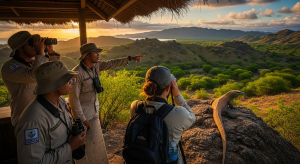
Komodo Volun Tourism — Komodo Voluntourism Pricing & Cost Guide
Welcome to our curated guide on komodo volun tourism — the definitive resource for premium options across Indonesia.
Komodo voluntourism costs typically range from $1,850 for a two-week reef restoration program to $3,800 for a four-week comprehensive conservation and community education experience. These fees cover structured program activities, local accommodation, three daily meals, on-site training, and internal ground and boat transfers within the Komodo National Park and Flores region. Your investment directly supports local wages, conservation materials, and community development initiatives.
The morning sun warms the deck of the traditional phinisi boat as it navigates the turquoise waters of the Savu Sea. Ahead, the outline of Rinca Island sharpens, a critical habitat for the Komodo dragon. Here, purpose converges with the pristine, offering a direct pathway to impact.
Understanding Komodo Voluntourism Costs: Investment in Impact
Participating in Komodo voluntourism represents a direct investment in the ecological preservation of a UNESCO World Heritage site and the socio-economic upliftment of its local communities. The financial structure of our programs reflects a commitment to transparency, ensuring every dollar contributes meaningfully to marine conservation, wildlife protection, and educational initiatives across Komodo National Park and the Manggarai region of Flores. Our costs are comprehensive, designed to cover essential operational expenses while maximizing direct community benefit. For example, 70% of all program fees are allocated directly to local staff wages, conservation materials, and community project funding. Komodo National Park, established in 1980, spans 1,733 square kilometers, encompassing three major islands: Komodo, Rinca, and Padar. These islands, along with numerous smaller islets, host a unique biodiversity, including over 4,000 Komodo dragons (Varanus komodoensis), according to the Komodo National Park Authority’s 2023 census. Our programs typically run for durations ranging from two to six weeks, with specific pricing tiers structured around program intensity and length. A two-week program in reef restoration, for instance, starts from $1,850, covering accommodation, three daily meals, and project-specific training. This includes permits, like the conservation fee for entry into Komodo National Park, which is approximately IDR 150,000 per person per day for international visitors, as mandated by the Indonesian government. Our goal is to provide a clear understanding of what your financial contribution achieves, from supporting coral nurseries in the Sape Strait to funding English teaching supplies in remote Flores villages. Each program tier outlines specific inclusions, ensuring you understand the value delivered for your commitment to Komodo’s future. The average daily cost for a voluntourist, factoring in all inclusions, ranges from $90 to $130, significantly lower than comparable luxury eco-tours due to the direct contribution model.
Tier 1: The Reef Guardian Program (Entry-Level Conservation)
The Reef Guardian Program offers an accessible entry point for those passionate about marine conservation, focusing primarily on coral reef restoration within designated areas of Komodo National Park. This two-week program is priced at $1,850 per participant, providing a foundational experience in marine ecology and hands-on conservation work. Your fee includes shared accommodation in a community guesthouse or eco-lodge on Flores, typically near Labuan Bajo, the gateway to Komodo. Three local, freshly prepared meals are provided daily, featuring Indonesian staples like Nasi Goreng and fresh fish. All internal transport, including boat transfers to reef sites and ground transport to project locations, is covered. Participants receive comprehensive training in coral fragmentation techniques, substrate preparation, and underwater reef monitoring protocols. We currently maintain 15 active coral nurseries, collectively propagating over 2,000 coral fragments annually, primarily focusing on fast-growing species like Acropora and Pocillopora. Divers with PADI Open Water certification (or equivalent) participate in underwater planting and monitoring, while non-divers support land-based nursery work and data entry. The program also covers the cost of all necessary conservation equipment, including dive gear (if certified), scientific tools, and safety equipment. A typical day involves morning dives or snorkeling sessions for coral planting, followed by afternoon data analysis or community engagement. This tier supports the employment of five local marine biologists and dive masters, ensuring expert guidance and local knowledge integration. Our reef restoration efforts target areas impacted by past blast fishing, aiming to restore biodiversity and fish populations. Since 2019, our projects have seen a 25% increase in fish biomass in restored areas compared to control sites, as measured by independent surveys. The program structure emphasizes practical skills and direct ecological contribution, making it ideal for students, first-time voluntourists, or those with limited time. For more details on specific marine conservation initiatives, visit our dedicated page at komodovoluntourism.com/reef-restoration-programs/.
Tier 2: Marine Life & Community Catalyst (Mid-Range Impact)
The Marine Life & Community Catalyst program expands your engagement over three weeks, combining dedicated marine conservation with vital community education initiatives. Priced at $2,700, this tier offers a deeper, more integrated experience, fostering connections both beneath the waves and within local villages. Accommodation often upgrades to private rooms in local guesthouses or a dedicated volunteer house, still providing three daily meals prepared by local chefs. All transport, including boat trips to Rinca Island for turtle hatchery support and land transfers to Manggarai communities for English teaching, remains fully covered. A significant component of this program involves working at our designated marine turtle hatchery on Rinca Island, established in 2021. Here, participants assist in monitoring nesting sites, relocating vulnerable eggs to protected enclosures, and releasing hatchlings into the wild. We aim to release over 500 green turtle (Chelonia mydas) and hawksbill turtle (Eretmochelys imbricata) hatchlings each nesting season, typically from May to September. This directly contributes to the survival rates of these endangered species, as documented by the IUCN Red List. Beyond marine efforts, participants dedicate 10-15 hours per week to community education. This includes teaching conversational English at local schools in villages such as Kampung Rinca or Loh Buaya, or assisting with environmental awareness workshops for children and adults. We provide teaching materials, lesson plans, and guidance from experienced local educators. This tier supports an additional three local community outreach coordinators and funds school supplies for three primary schools in the region. Your investment also contributes to the maintenance of the turtle hatchery infrastructure and the purchase of educational resources. The program facilitates cultural exchange opportunities, including traditional cooking classes or visits to local markets, enriching your understanding of Flores culture. This comprehensive approach provides a balanced perspective on conservation, recognizing that ecological health is intrinsically linked to community well-being. The Komodo National Park was designated a UNESCO World Heritage Site in 1991, acknowledging its outstanding universal value. Our programs reinforce this status through direct action.
Tier 3: The Komodo Ecosystem Steward (Comprehensive Immersion)
For those seeking the most profound and extensive engagement, The Komodo Ecosystem Steward program offers a four-week (or longer) comprehensive immersion, priced at $3,800. This tier is designed for individuals, ESG corporate teams, or students on gap years who desire to contribute significantly to multiple facets of conservation and community development. Accommodation options typically include private rooms in premium local guesthouses or dedicated eco-resorts, often with enhanced amenities. All meals are provided, with opportunities for diverse culinary experiences. Comprehensive transport, including specialized boat charters for remote site visits and extensive ground transfers across Flores, is standard. This program integrates advanced reef restoration techniques, including monitoring complex reef health indicators and potentially participating in scientific diving surveys alongside local researchers. Participants can also engage in long-term data collection projects for the Komodo dragon population, working in conjunction with Komodo National Park rangers, under strict guidelines. This might involve setting up camera traps or assisting in habitat assessments. Our collaboration with the Komodo National Park Authority helps support anti-poaching patrols and habitat protection initiatives across the 29 islands within the park. In community development, participants might lead longer-term English language programs, develop sustainable livelihood projects with local women’s groups, or assist in establishing waste management systems in villages. This includes working with the Manggarai communities, specifically in areas around Labuan Bajo, where population growth presents unique environmental challenges. The program fee supports specialized training, such as advanced first aid or specific conservation certifications, and contributes to larger infrastructure projects, like solar panel installations for community centers. This tier ensures a deeper connection with local experts and offers opportunities for leadership within project teams. Participants often leave with a profound understanding of the interdependencies within the Komodo ecosystem and a tangible portfolio of conservation achievements. The long-term nature of this program allows for measurable impact, with many participants contributing to project reports and strategic planning. For corporate teams, customized programs can be arranged, aligning with specific ESG objectives, leveraging our experience since 2017 in facilitating impactful group voluntourism. More information on our community impact can be found at komodovoluntourism.com/flores-community-impact/.
What Your Investment Supports: Impact & Transparency
Every dollar contributed to Komodo voluntourism is meticulously allocated to ensure maximum positive impact and operational efficiency. We operate with full financial transparency, providing annual impact reports detailing expenditure and outcomes. Approximately 35% of your program fee covers direct project costs, including conservation materials like coral fragments, nursery construction supplies, and scientific monitoring equipment. This also includes educational resources such as textbooks, stationery, and teaching aids for community schools. Another 35% is dedicated to local wages and livelihoods, directly employing over 12 full-time Indonesian staff members, including marine biologists, dive masters, community coordinators, boat captains, and cooks. These individuals are the backbone of our operations, bringing invaluable local expertise and ensuring sustainable economic benefits for the region. The remaining 30% covers essential operational overheads, including permits (Komodo National Park entry fees, research permits), insurance, administrative costs, marketing, and the maintenance of our boats and vehicles. For instance, the annual permit costs for operating within Komodo National Park can exceed IDR 50 million. Our commitment to supporting local economies extends beyond direct wages; we source all food and supplies from local markets and businesses in Labuan Bajo and surrounding villages, injecting capital directly into the regional economy. Since our inception in 2017, we have facilitated the planting of over 10,000 coral fragments, supported the release of 2,000 turtle hatchlings, and provided English education to more than 500 students across the Manggarai Regency. The Komodo dragon, an apex predator, is endemic to five islands: Komodo, Rinca, Gili Motang, Gili Dasami, and Flores. Our work indirectly supports their habitat preservation by maintaining a healthy ecosystem. We partner with local NGOs, such as the Flores Marine Conservation Society (a non-profit founded in 2015), to amplify our reach and expertise. Our financial model prioritizes direct action and community empowerment, ensuring your contribution creates lasting change in one of Indonesia’s most ecologically significant regions. For a comprehensive overview of Komodo National Park’s ecological significance, refer to its UNESCO World Heritage listing.
Additional Costs & Planning Considerations
While our program fees are comprehensive for on-site activities, it is important to factor in additional personal expenses and travel logistics when planning your Komodo voluntourism journey. International flights to Ngurah Rai International Airport (DPS) in Denpasar, Bali, and subsequent domestic flights to Komodo Airport (LBJ) in Labuan Bajo, Flores, are not included. Round-trip international flights to Bali typically range from $800 to $1,500, depending on your departure location and booking time. Domestic flights from Bali to Labuan Bajo generally cost between $50 and $150 each way. Visa requirements for Indonesia vary by nationality; most visitors from 90 countries can obtain a Visa On Arrival (VOA) for 30 days, extendable once, at a cost of IDR 500,000 (approximately $35). We recommend checking the official Indonesia.travel website for the most up-to-date information. Personal spending money for souvenirs, snacks, extra beverages, or optional excursions (e.g., a sunrise trek on Padar Island, which incurs an additional local guide fee of approximately IDR 100,000) should be budgeted. We suggest an allowance of $50-$100 per week for these incidentals. Travel insurance is mandatory for all participants, covering medical emergencies, trip cancellations, and personal liability; policies typically range from $50 to $150 for a multi-week trip. Vaccinations are recommended for travel to Indonesia, including Hepatitis A, Typhoid, and Tetanus, as advised by your healthcare provider. Some programs might offer optional certifications, such as a PADI Advanced Open Water Diver course, which would incur an additional fee of approximately $350-$450. We also encourage participants to bring a reusable water bottle to minimize plastic waste, aligning with our sustainability ethos. Understanding these additional costs ensures a seamless and fully prepared experience in the Komodo and Flores region, allowing you to focus entirely on your impactful contribution.
The commitment to Komodo voluntourism extends beyond a simple trip; it is an active participation in preserving an irreplaceable natural wonder and empowering its communities. Your choice to engage directly translates into tangible outcomes for marine life, the Komodo dragon, and the people of Flores. Ready to make your mark? Explore our diverse programs and find your perfect fit at komodovoluntourism.com, or contact us directly to discuss how your passion can fuel positive change.