Komodo Volun Tourism — The Definitive Komodo Voluntourism Guide
Welcome to our curated guide on komodo volun tourism — the definitive resource for premium options across Indonesia.
The morning light catches the gentle swell of the Savu Sea, painting the volcanic islands of Komodo National Park in hues of amethyst and emerald. A salt breeze carries the scent of distant frangipani and the promise of meaningful engagement. This is the operational canvas for komodo voluntourism, where purpose aligns with the planet’s pressing needs.
The Definitive Guide to Komodo Voluntourism
Komodo voluntourism represents a unique intersection of conservation, community development, and experiential travel within one of Earth’s most biodiverse regions. It moves beyond passive observation, inviting participants to directly impact the delicate ecosystems and human communities of Komodo National Park and the wider Flores archipelago. Established in 1980 to protect the Komodo dragon, the park spans over 173,300 hectares of land and marine territory. Its designation as a UNESCO World Heritage Site in 1991 underscores its global ecological significance. Voluntourism programs here are not merely vacations; they are conduits for tangible change, offering opportunities to engage with critical projects ranging from marine biology to socio-economic empowerment. Participants might spend two weeks assisting a coral reef restoration project or a month teaching English in a coastal village. This engagement directly supports local initiatives, fostering a sustainable future for the region. The Komodo National Park management collaborates with various organizations, ensuring projects align with long-term conservation goals. Discover how you can contribute at komodovoluntourism.com.
Understanding the operational framework of Komodo voluntourism is key for prospective participants. Programs often operate out of Labuan Bajo, the gateway town on Flores, or directly from ranger stations on islands like Rinca and Padar. The average program duration is typically between 10 days and 4 weeks, with costs varying based on project intensity and accommodation. Participants often report an average daily expenditure of $75-$150, covering basic needs and project contributions. The core principle involves collaborative work with local scientists, park rangers, and educators. This ensures that every effort is culturally sensitive and scientifically sound. For instance, marine projects often require PADI Open Water certification or equivalent, and some programs provide this training as part of the package. The focus remains on sustainable practices, with a strong emphasis on capacity building within local communities. This approach ensures that the impact of voluntourism extends far beyond the duration of any single project, creating lasting benefits for the region’s people and wildlife.
Marine Conservation: Protecting Reefs and Turtles
The waters surrounding Komodo National Park teem with life, boasting over 250 species of coral and more than 1,000 species of fish. This vibrant marine environment, however, faces threats from climate change, unsustainable fishing practices, and plastic pollution. Komodo voluntourism offers robust marine conservation programs designed to mitigate these challenges. Projects frequently involve coral reef restoration, where participants assist marine biologists in rehabilitating damaged reef systems. This work includes fragmenting healthy corals, attaching them to artificial structures, and monitoring their growth. A typical reef restoration project might involve planting 50-100 coral fragments per week. Many organizations partner with local dive centers, ensuring volunteers receive proper training in responsible diving practices and coral handling techniques. Organizations like the Komodo Collaborative for Marine Conservation often publish quarterly reports detailing project impact.
Another crucial aspect of marine voluntourism focuses on sea turtle protection. Komodo National Park is home to several species, including the Green Sea Turtle (Chelonia mydas) and the Hawksbill Sea Turtle (Eretmochelys imbricata). Voluntourists contribute to turtle hatcheries, monitoring nesting sites on remote beaches, protecting eggs from predators, and assisting with the safe release of hatchlings. A single nesting season can see dozens of nests, each containing an average of 100-120 eggs. Participants learn about turtle biology, nesting patterns, and the threats these endangered species face. Data collected by voluntourists, such as nest locations and hatchling success rates, directly informs conservation strategies implemented by organizations like the Komodo Turtle Sanctuary Project. These efforts are vital, as only an estimated 1 in 1,000 sea turtle hatchlings survive to adulthood. Engaging in these programs provides a direct link to the preservation of these ancient mariners. Learn more about specific marine initiatives at /coral-restoration-methods/.
Komodo Dragon Conservation & Ranger Support
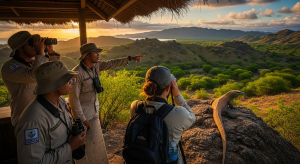
The Komodo dragon (Varanus komodoensis), the world’s largest living lizard, is an apex predator found only in this specific region of Indonesia. Approximately 3,000 individuals inhabit Komodo National Park, primarily on Komodo, Rinca, Gili Motang, and Nusa Kode islands. Protecting this iconic species and its habitat is a cornerstone of Komodo voluntourism. Programs in this area often involve supporting park rangers in their daily duties. This can include habitat monitoring, tracking dragon movements, and assisting with anti-poaching patrols. Rangers cover extensive ground, with daily patrols often spanning 10-15 kilometers across rugged terrain. Voluntourists might also help maintain park infrastructure, such as visitor trails and ranger outposts, ensuring minimal human impact on sensitive areas.
Direct interaction with Komodo dragons is strictly regulated and always under the supervision of experienced park rangers, adhering to the guidelines set by the Komodo National Park Authority. The focus is on observation and data collection, not direct intervention. Participants might contribute to camera trap deployment and data analysis, which provides crucial insights into dragon behavior, population dynamics, and prey availability. For instance, data from camera traps has helped identify specific breeding grounds on Rinca Island. The park’s operational budget relies heavily on tourism, and voluntourism contributions directly support ranger salaries, equipment, and conservation initiatives. The commitment to preserving this unique species is absolute, considering its vulnerable status on the IUCN Red List. This work offers an opportunity to contribute to the survival of a creature that has roamed these islands for millions of years. For a deeper understanding of ranger life, visit /life-as-a-komodo-ranger/.
Community Empowerment & Education in Flores
Beyond the boundaries of Komodo National Park, the island of Flores presents significant opportunities for community-focused voluntourism. The Manggarai communities, particularly those in coastal villages near Labuan Bajo, are vital partners in regional conservation efforts. Many local livelihoods depend on sustainable tourism and fishing. Voluntourism programs here concentrate on education, economic empowerment, and public health initiatives. English teaching is a prominent activity, with volunteers assisting local schools and community centers. The demand for English language skills is high, as it directly correlates with opportunities in the burgeoning tourism sector. A typical program might see a volunteer teaching 15-20 hours per week in a primary or secondary school, often with class sizes ranging from 20 to 40 students.
Other community projects focus on sustainable development. This includes assisting with waste management and recycling initiatives, promoting eco-tourism practices, and supporting local artisan cooperatives. For example, some programs collaborate with women’s weaving groups in remote villages, helping them market their traditional ikat textiles, which can fetch prices upwards of IDR 500,000 per piece in tourist markets. These initiatives are designed to provide alternative income sources, reducing reliance on potentially unsustainable practices. The goal is to build local capacity and self-sufficiency, ensuring long-term benefits for the residents of Flores. The cultural exchange is profound, offering voluntourists a genuine connection with the rich traditions and daily lives of the Manggarai people. Organizations frequently partner with local NGOs, such as the Flores Education Foundation, to ensure projects are impactful and culturally appropriate. Discover more about our community engagement at /flores-community-projects/.
Navigating Your Voluntourism Journey: Choosing and Preparing
Choosing the right Komodo voluntourism program requires careful consideration to ensure alignment with personal goals and ethical standards. Prospective participants should research organizations thoroughly, verifying their credentials, project transparency, and impact reporting. Reputable programs will typically be registered with Indonesian authorities and possess relevant permits from Komodo National Park. Look for organizations with established partnerships with local communities and scientific bodies. Certifications such as PADI AWARE for marine conservation or endorsements from national park authorities indicate a commitment to best practices. Program costs often range from $1,500 to $4,000 for a two-week period, usually covering accommodation, meals, project materials, and local transport. It is advisable to clarify what is included before committing.
Preparation for a Komodo voluntourism journey involves more than just packing. Health and safety are paramount. Consult a travel doctor for necessary vaccinations, which typically include Hepatitis A and B, Typhoid, and Tetanus. Dengue fever is also a consideration in the region. Travel insurance, including emergency medical evacuation, is non-negotiable. Physical fitness requirements vary by project; marine conservation might involve daily diving, while ranger support could mean extensive trekking. Most programs recommend a reasonable level of fitness. Cultural sensitivity is also crucial. Learning basic Indonesian phrases (Bahasa Indonesia) like “Terima kasih” (Thank you) or “Apa kabar?” (How are you?) demonstrates respect. Understanding local customs, such as modest dress in villages, enhances the experience. The dry season, from April to October, generally offers the most favorable weather conditions for travel and project work, with average temperatures around 28-32°C. For comprehensive planning resources, visit indonesia.travel.
The Voluntourist Profile: Meaningful Engagement
The individuals drawn to Komodo voluntourism share a common thread: a desire for meaningful engagement that extends beyond traditional tourism. This demographic often includes gap-year travelers seeking purpose, university students fulfilling practical experience requirements, and professionals on career breaks. ESG corporate teams increasingly participate, viewing these programs as tangible expressions of their environmental, social, and governance commitments. Such teams might engage in a week-long reef restoration project, contributing to their corporate social responsibility metrics. Participants typically range in age from 18 to 65, bringing diverse skills and perspectives to the projects. A willingness to adapt, work collaboratively, and embrace new cultural contexts is more valuable than specific prior experience for many roles.
The return on investment for voluntourists is profound. Beyond contributing to critical conservation and community projects, participants gain invaluable skills, cultural insights, and a deeper understanding of global environmental challenges. For students, it provides field experience that complements academic studies. For corporate teams, it fosters team building and demonstrates a genuine commitment to sustainability. The experience shapes perspectives, cultivating a heightened sense of global citizenship. The Komodo National Park, recognized by UNESCO, offers a backdrop for this transformative journey, where every action contributes to preserving a world heritage site. This is not merely travel; it is an active contribution to the planet’s future, the power of collective effort. Explore the possibilities for your meaningful journey at komodovoluntourism.com.